Thinking About a New Driveway? Here’s the Truth About Concrete vs Asphalt
When it comes to paving driveways, roads, and parking lots, two materials often come up for comparison: concrete vs asphalt. Both materials are durable, versatile, and widely used in construction, but they each have distinct advantages and disadvantages. Understanding the differences between concrete vs asphalt can help you choose the right material for your project based on factors such as cost, durability, aesthetics, and maintenance requirements. In this article, we’ll compare the two paving materials and help you make an informed decision.
What is Concrete?
Concrete is a composite material made up of cement, water, and aggregates like sand and gravel. It is known for its strength and longevity. Concrete is commonly used for paving driveways, roads, sidewalks, and patios due to its durability and the ability to withstand heavy traffic.
Key Features of Concrete:
- Durability: Concrete is incredibly strong and can last up to 30 years or more with proper maintenance.
- Variety of Finishes: Concrete can be stamped, stained, or colored, offering a wide range of aesthetic options.
- Maintenance: Concrete requires less frequent maintenance than asphalt but may need occasional sealing to prevent cracks.
What is Asphalt?
Asphalt, also known as blacktop, is a petroleum-based material commonly used for roads, driveways, and parking lots. Asphalt is made by combining aggregates (sand, gravel, or crushed stone) with bitumen, which is a byproduct of petroleum refining. It is known for its smooth finish and fast installation process.
Key Features of Asphalt:
- Flexibility: Asphalt is more flexible than concrete, which allows it to handle temperature changes and freezing/thawing cycles better.
- Cost-Effective: Asphalt is generally less expensive than concrete, making it a more affordable option for large paving projects.
- Quick Installation: Asphalt typically cures faster than concrete, allowing for quicker project completion.
Overview: Asphalt vs Concrete Driveways
Both asphalt and concrete are popular paving materials, but they differ significantly in composition, appearance, and longevity.
| Feature | Asphalt Driveway | Concrete Driveway |
|---|---|---|
| Appearance | Black, matte finish | Light gray, can be textured/stamped |
| Installation Time | 1–2 days | 2–5 days |
| Durability | 20–30 years | 30–40+ years |
| Maintenance | Needs sealing every 3–5 years | Occasional sealing or cleaning |
| Initial Cost | Lower upfront cost | Higher initial cost |
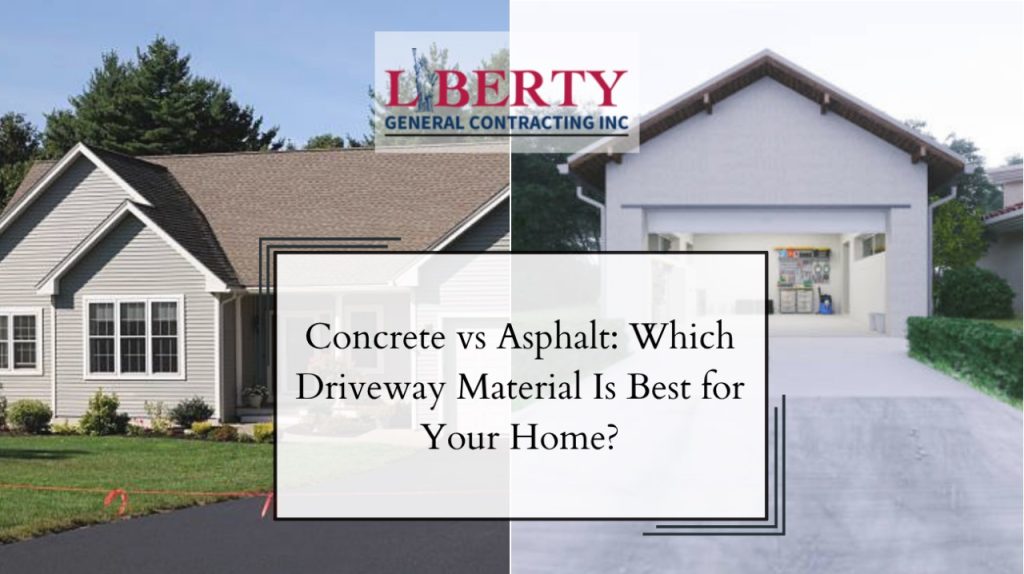
Concrete vs Asphalt: Durability and Lifespan
One of the main differences between concrete vs asphalt is their durability and lifespan. Concrete is known for its longevity and resistance to wear and tear, while asphalt, although flexible, tends to require more maintenance over time.
- Concrete: Concrete is highly resistant to cracking and damage from UV rays, making it an ideal choice for long-term durability. With proper maintenance, concrete surfaces can last up to 30 years or more.
- Asphalt: Asphalt is more flexible and can expand and contract with temperature changes, but it is also more susceptible to wear from UV rays, oil spills, and extreme weather conditions. Asphalt driveways typically last around 15 to 20 years with regular maintenance.
Concrete vs Asphalt: Cost Comparison
Cost is often a deciding factor when choosing between concrete vs asphalt. While asphalt is typically cheaper to install, concrete’s long-term durability and low maintenance requirements may make it more cost-effective in the long run.
- Asphalt: The initial installation cost of asphalt is generally lower than that of concrete. On average, asphalt paving costs between $2 to $5 per square foot.
- Concrete: Concrete is more expensive to install, with costs typically ranging from $4 to $10 per square foot, depending on the type of finish and the complexity of the project.
Although asphalt is less expensive to install, it requires more frequent maintenance, such as resealing every few years, which can add to its long-term cost.
Concrete vs Asphalt: Aesthetic Options
When it comes to aesthetics, concrete vs asphalt offers different possibilities for your driveway or pavement project.
- Concrete: Concrete offers a wide range of design options. It can be stamped to resemble brick, stone, or other materials, and it can also be stained or colored. This flexibility allows for customized, decorative finishes that can complement your home’s exterior.
- Asphalt: Asphalt typically has a standard black color and smooth finish. While it is functional, it doesn’t offer as many aesthetic options as concrete. However, there are some decorative asphalt options, such as colored asphalt, though they are less common.
Concrete vs Asphalt: Maintenance Requirements
Both concrete and asphalt require maintenance, but the frequency and type of maintenance differ for each material.
- Concrete: Concrete is relatively low maintenance. It may need resealing every 2-3 years to prevent cracks and stains, and it’s important to repair any cracks promptly to prevent further damage. Concrete is also more resistant to oil stains, making it easier to maintain in high-traffic areas.
- Asphalt: Asphalt requires more frequent maintenance than concrete. It should be resealed every 3-5 years to protect against water damage and UV rays. Asphalt is also more prone to damage from oil spills and can crack over time due to temperature fluctuations.
Concrete vs Asphalt: Which Should You Choose?
The decision between concrete vs asphalt ultimately depends on your specific needs, budget, and long-term goals. Here are some key considerations to help you choose:
- Choose Concrete if:
- You are looking for a long-lasting, durable solution.
- You want a variety of aesthetic options, such as stamped or colored concrete.
- You don’t mind paying a higher upfront cost for low maintenance over time.
- Choose Asphalt if:
- You have a limited budget and need an affordable option.
- You want a quick installation process.
- You are willing to perform more frequent maintenance, including resealing.
Which lasts longer, a concrete or asphalt driveway?
When it comes to lifespan, concrete driveways typically last 30 to 40 years with minimal upkeep. On the other hand, asphalt driveways usually hold up for 20 to 30 years. So if long-term durability matters to you, concrete may be the smarter investment—especially if you don’t mind the higher upfront cost.
What’s the average price of asphalt vs concrete driveway installation?
The price of asphalt vs concrete driveway varies based on location, labor, and materials. Asphalt usually costs between $3 and $7 per square foot, making it the more budget-friendly option. Concrete ranges from $6 to $12 per square foot, but thanks to its longevity, the higher price may be justified over time.
Is concrete or asphalt better for cold climates?
If you live in a colder region like New York City, asphalt driveways tend to handle freeze-thaw cycles better than concrete. Asphalt is more flexible and less likely to crack under pressure. However, sealing either material regularly can help extend its lifespan and protect against harsh weather.
Which material offers better curb appeal—concrete or asphalt?
It depends on the style you’re after. Concrete driveways can be stamped, stained, or textured for a custom look that complements your home’s exterior. Asphalt, while more uniform and sleek, usually comes in a standard black finish. If visual appeal is important, concrete gives you more design freedom.
Can I replace my asphalt driveway with concrete, or vice versa?
Yes, it’s absolutely possible to switch between the two. However, keep in mind that removing an old driveway and prepping the ground for a new one—whether concrete vs asphalt—can raise your installation costs. A professional contractor can evaluate your site and recommend the best approach.
Need Help Choosing the Right Driveway Material?
Both concrete vs asphalt have their advantages and disadvantages, and the right choice depends on your specific needs. If you’re looking for a cost-effective and flexible solution, asphalt might be the way to go. However, if you want a durable, low-maintenance surface with design options, concrete is likely the better choice. Consider your budget, aesthetic preferences, and how much maintenance you’re willing to do when deciding between concrete and asphalt for your paving project.
Contact Liberty GCNY
Website: www.libertygcny.com
Phone: (347) 682-9840
Serving: Manhattan, Brooklyn, Queens, The Bronx, Westchester County, and Long Island.
Address:110-14 178th St, Jamaica, NY
Need Help with Your Next Project? Call Liberty GCNY Today!
Fast responses. Expert advice. Trusted service across NYC and beyond.