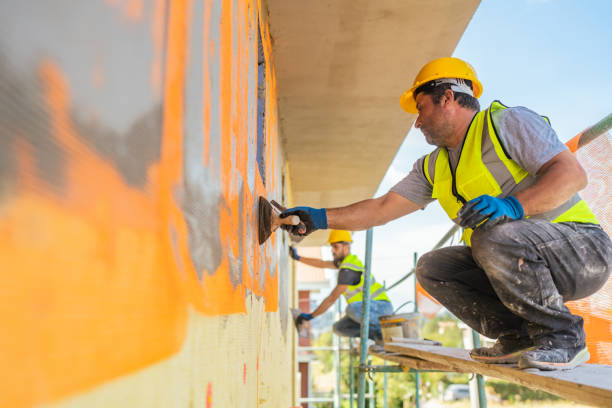
Winter weather in New York City, the Bronx, Queens, Brooklyn, Westchester, and New Jersey is one of the biggest causes of water leaks in buildings. While many property owners focus on roof problems, exterior walls are just as vulnerable—especially stucco walls, brick façades, and parapet walls.
The main reason is the freeze–thaw cycle. Moisture enters small cracks, gaps, and weak joints. Overnight, that water freezes and expands, forcing the surface open wider. During the day, it melts and sinks deeper into the wall system. After a few weeks of freezing and warming, minor wall cracks can turn into major water leaks, interior damage, and structural deterioration.
Table of Contents
This guide explains the most common winter leak points, the warning signs to watch for, and the best professional steps to prevent water leaks before they become expensive repairs.
Why Winter Causes Water Leaks in Stucco, Brick & Parapet Walls
Winter water leaks usually start with small openings that are easy to miss. Once water enters, freezing temperatures increase the damage fast. In NYC buildings, exterior walls often face wind-driven rain, snow buildup, and constant temperature changes. That combination creates the perfect conditions for cracks to expand and leak paths to form behind the façade.
Common causes of winter water leaks include:
- Hairline cracks that widen over time
- Old caulking that shrinks and separates
- Mortar joints that loosen or wash out
- Parapet walls cracking near the roofline
- Poor patchwork that absorbs moisture
If these issues aren’t repaired early, winter moisture intrusion can quickly become a full interior leak.
1. Common Winter Leak Points That Cause Water Leaks
Most winter water leaks come from the same areas on exterior walls. If you know where to look, you can catch the problem before it spreads.
The most common winter leak points include:
- Cracked stucco surfaces that allow water behind the finish coat
- Loose mortar joints in brick where water enters the wall cavity
- Damaged parapet walls with open joints or failing coping stones
- Failed window caulking around frames and sills
- Open roof-to-wall seams where the roof meets the parapet
- Poorly sealed stucco patches that crack again after freezing
These weak points allow water entry, and once freezing starts, the leak paths expand quickly.
2. Why Winter Water Leaks Become Expensive
A winter water leak isn’t just a small stain. Water travels behind walls, spreads through insulation, and damages interior finishes. The longer it continues, the more expensive it becomes to repair.
Common damage caused by winter water leaks:
- Interior wall and ceiling damage (stains, peeling paint, cracked plaster)
- Mold and mildew growth from trapped moisture
- Stucco detachment, where sections loosen and separate
- Brick spalling, where brick faces crack and chip
- Structural weakening from repeated saturation and freezing
- Electrical risks, especially when water reaches wiring
Many building owners end up paying for interior restoration, mold cleanup, and repeated leak calls—when early waterproofing could have prevented it.
3. Professional Leak Prevention Steps to Stop Water Leaks
Preventing winter water leaks requires more than surface caulking. A proper repair plan focuses on identifying entry points, restoring damaged materials, and waterproofing the wall system so it can handle freeze–thaw movement.
Step 1: Inspect for Micro-Cracks and Moisture Damage
Most leaks begin with tiny cracks that aren’t obvious from the street. A professional inspection should look for:
- Hairline cracks in stucco or brick
- Hollow stucco areas (sign of separation)
- Water stains under windows or parapet lines
- Mortar erosion and missing joints
- Open seams between roof and wall
Finding these early is the fastest way to stop water leaks before winter makes them worse.
Step 2: Repair Stucco the Right Way
Stucco leaks are common in winter because poor repairs absorb moisture and crack again. Professional stucco repair typically includes:
- Using Sika repair systems such as Sika 123 / Sika Patch
- Installing wire lath for reinforcement where needed
- Applying a strong base coat
- Adding a matching finish coat
- Sealing with a waterproof coating for long-term protection
Correct stucco repair restores strength and prevents recurring water leaks.
Step 3: Repoint Brick Mortar Joints
Brick walls usually leak through the mortar joints, not the brick itself. Repointing restores the wall’s waterproofing and strength. Professional repointing includes:
- Grinding out failing mortar
- Cleaning joints properly
- Repointing with Type-N or Type-S waterproof mortar
- Tooling joints tightly for durability
This prevents moisture from entering and reduces freeze–thaw cracking.
Step 4: Waterproof Exterior Walls with Thorocoat
After repairs are complete, waterproofing helps stop future water leaks. Thorocoat elastomeric coating is often used because it:
- Bridges small cracks
- Handles wall movement better than standard paint
- Creates a waterproof barrier across the surface
- Reduces future freeze–thaw penetration
This coating is ideal for stucco and masonry surfaces exposed to harsh winter weather.
Step 5: Seal and Waterproof Parapet Walls
Parapet walls are one of the biggest sources of winter water leaks in NYC buildings. Water enters cracks near the roofline and travels behind the wall system. Proper parapet sealing includes:
- Repairing cracks and open joints
- Sealing coping stones and top edges
- Fixing or reinforcing flashing
- Waterproofing parapet surfaces where needed
Parapet wall leaks often show up as interior wall stains near top-floor ceilings.
Step 6: Seal Window Perimeters to Prevent Water Leaks
Many “wall leaks” are actually window perimeter leaks. When caulking fails, water enters the wall cavity and shows up as interior stains and mold. Proper sealing includes:
- Removing old, failing caulk
- Cleaning and prepping the surface
- Applying commercial silicone caulk
- Installing flashing systems when necessary
Window perimeter sealing is one of the most effective ways to reduce winter water intrusion.
4. Signs Your Wall Is Already Leaking
If your building has winter water leaks, you’ll usually notice these signs first:
Common signs of active water leaks:
- Wall stains near ceilings or windows
- Efflorescence (white powder on brick or stucco)
- Bubbling or peeling paint
- Mold smell indoors
- Damp walls or wet interior spots
- Wet areas during snow melt or heavy rain
If these signs are present, water is already entering the wall system and repairs should not be delayed.
5. Best Waterproofing Materials for Winter Water Leak Prevention
Using the right materials makes a major difference in stopping water leaks long-term.
Recommended waterproofing materials include:
- Sika 123 / Sika Patch (stucco repair systems)
- Thorocoat elastomeric coating (waterproof barrier + crack bridging)
- Commercial silicone caulking (windows and joints)
- Type-N and Type-S mortar (brick repointing)
- Self-adhered membrane (roof-to-wall waterproofing)
These materials work best when installed properly with correct surface prep.
6. Why You Should Act Now (Even in Winter)
Many owners wait until spring, but winter water leaks don’t stop—they get worse. Every freeze–thaw cycle expands cracks and increases moisture damage.
Waiting can cause:
- Deeper wall saturation
- Larger repair areas
- Higher restoration costs
- Structural deterioration
- Mold growth inside units
Fixing small problems early is always cheaper than repairing widespread water damage later.
7. Why Liberty General Contracting Inc.
Liberty General Contracting Inc. specializes in stopping water leaks in stucco, brick, and parapet walls across NYC, Westchester, New Jersey, and Connecticut.
We provide long-term solutions such as:
- Stucco repair and waterproofing systems
- Brick repointing and masonry restoration
- Parapet wall crack sealing and flashing repairs
- Roof-to-wall seam waterproofing
- Window perimeter sealing
- Leak investigation and prevention services
We are licensed, insured, and experienced with NYC building conditions, delivering repairs that hold up through real winter weather.
Contact Us
Website: www.libertygcny.com
Phone: (347) 682-9840
Serving: Manhattan, Brooklyn, Queens, The Bronx, Westchester County, and Long Island.
Address:110-14 178th St, Jamaica, NY